

Cedar Pergola Care: Seasonal Checks and Refinishing
The short answer
Care for a cedar pergola with a seasonal round: tighten bolts and check the post bases each spring, keep plants trained and beam tops clear, take fabric shades down before winter, and inspect the hardware after storms. Clean gently with a soft brush, and refinish with an exterior cedar product once water stops beading.
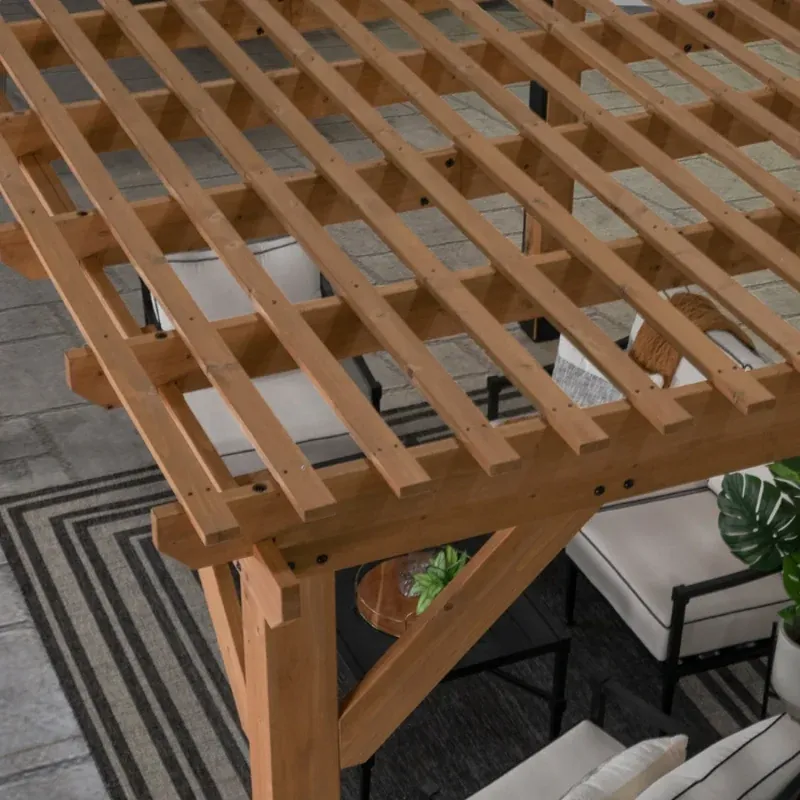
Cedar gives a pergola a warm colour and a natural grain. It is still wood, though, and wood outdoors changes with sun, rain and frost. A few checks through the seasons keep a cedar frame sound and looking the way you wanted. This guide to cedar pergola care covers the factory finish, routine checks, cleaning and refinishing in general terms, using the cedar pergolas in our range as examples.
How the kits arrive
The Backyard Discovery cedar pergolas we carry arrive with the wood already cut, drilled and stained at the factory:
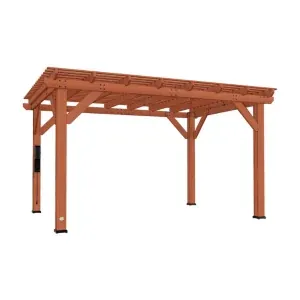
- The Delray 14×10 wears a light brown factory stain over wide purlins and reinforced cross beams.
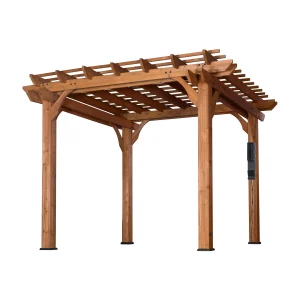
- The Beaumont 10×10 is solid cedar under a multi-level trellis, with heavy-duty galvanized steel hardware and decorative post covers.
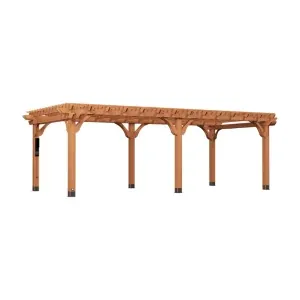
- The Beaumont 24×12 stands on six 6 by 6 inch cedar posts with galvanized hardware and steel base plates.
A factory stain gives the frame colour and a first layer of protection from day one. Like any exterior finish, it weathers. How quickly depends on how much sun and rain the frame gets, so a pergola in full sun on a south-facing patio will need attention sooner than one in dappled shade.
A seasonal routine
Spring
- Walk round the frame and look at every joint. Tighten any bolt that has loosened as the wood dried over winter.
- Check the post bases: anchors firm, base plates sound, no water standing against the timber.
- Wash off winter grime with a soft brush and plain water or a cleaner made for exterior wood.
Summer
- Keep climbing plants trained onto the frame rather than wrapped tightly around beams, where they hold moisture against the wood.
- Look at the tops of beams and purlins, where sun and rain hit hardest, for a dull, dry or grey surface.
Autumn
- Clear leaves and debris from the tops of beams and from around the posts.
- Take down fabric shades before winter storms, since they add wind load the frame was not rated with.
Winter
- After a storm, check for loose hardware or anything that struck the frame.
- Brush heavy snow off planters or shades resting on the frame. The cedar pergolas in our range publish a wind figure but no snow figure.
Hardware checks after storms
Backyard Discovery gives these pergolas a 100 mph wind rating on condition that they are fixed down as its instructions describe. After any strong blow, look at the galvanized brackets and bolts: they should be tight, with no bent plates and no fresh cracks in the wood around fixings. Galvanized steel resists rust, but a scratch through the coating can start a spot of corrosion; clean it and treat it with a product made for galvanized metal.
Cleaning without damage
Gentle is the rule. A soft brush and water shift ordinary dirt. If you use a wood cleaner, choose one meant for exterior timber and follow its label. Avoid a high-pressure jet held close to the surface: it can raise the grain and strip finish unevenly. Rinse well and let the wood dry fully before applying anything.
Refinishing in general terms
When the colour has faded or water no longer beads on the surface, it is time to refinish. The steps are broadly the same whatever product you use:
- Clean the frame and let it dry completely.
- Lightly sand rough or grey areas so the new finish can soak in.
- Choose an exterior stain or oil suitable for cedar, and test it on a hidden spot to check the colour against the factory stain.
- Apply it in the conditions its label states, usually dry weather within a temperature range, and avoid hot direct sun.
- Pay extra attention to cut ends and the tops of horizontal members, which soak up water fastest.
Follow the maker’s care notes too, since some finishes are not compatible with each other.
Grey is a choice too
Left unfinished, cedar weathers to a silver grey. Some owners prefer that look. It is a colour change on the surface rather than rot, but the wood is less protected from water and the surface can check (develop small cracks) more readily. If you choose to let it go grey, keep up the hardware and base checks above.
Cedar compared with other frames
Vinyl and powder-coated steel ask for different care: washing and coating checks rather than staining. The upkeep of each frame material is set side by side in our cedar, vinyl and steel pergola comparison. For the rest of the buying decision, read the pergola buying guide or browse all our pergolas.
Frequently asked questions
Can I pressure-wash a cedar pergola?
Avoid a close high-pressure jet: it can raise the grain and strip the finish unevenly. A soft brush with water, or a cleaner made for exterior timber, is the gentler route.
How do I know it is time to refinish?
When the colour has faded or water no longer beads on the surface. Clean, dry and lightly sand first, and test the new stain on a hidden spot.
Is grey cedar rotten?
No. Silver grey is a surface change, not rot, though unfinished wood is less protected from water and can check more readily.
What should I look at after a storm?
The galvanized brackets and bolts: they should be tight, with no bent plates and no fresh cracks in the wood around the fixings.