

Pergola with Power Outlets: What the PowerPort Adds
The short answer
The PowerPort is a panel on one pergola post with three electrical outlets and three USB ports, so string lights, a fan, a speaker or a charger plug into the frame. It comes on the Beaumont 10x10 and 24x12, the Delray 14x10 and the Evanston 12x10; connecting it to your supply is work for a licensed electrician.
A pergola comes into its own in the evening, and evenings need light. Running an extension cord across the lawn works for a party but not for every night of the summer. Several pergolas in our range build the power into the frame with a post Backyard Discovery calls the PowerPort. This article looks at what a pergola with power outlets offers, which models carry it, and the electrical questions to settle locally before you order.
What the PowerPort is
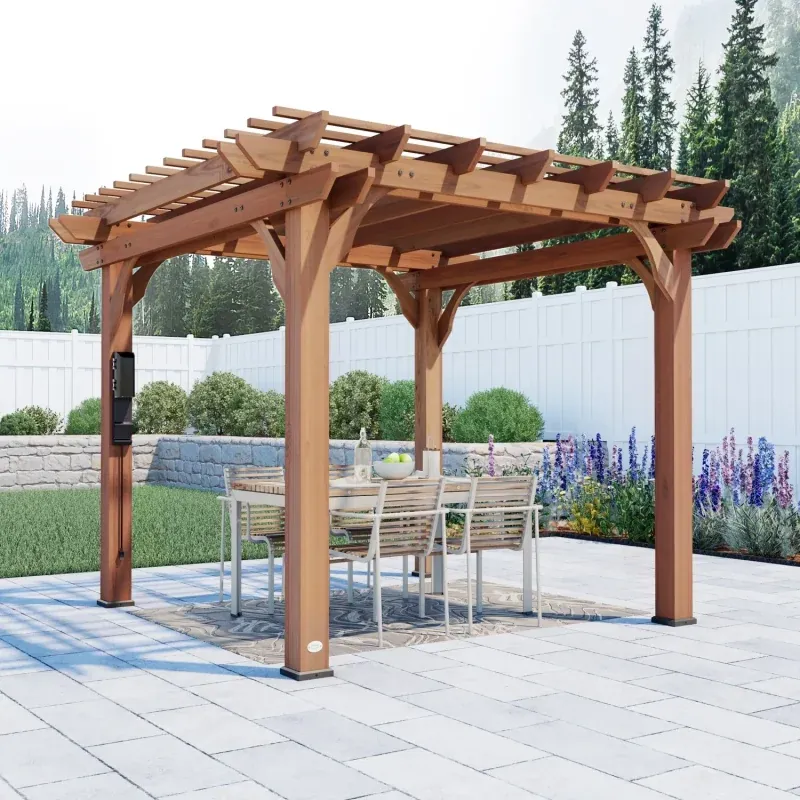
The PowerPort is a panel on one post with three electrical outlets alongside three USB ports, set within reach of the seating. It turns the frame itself into the place you plug in string lights, a fan, a speaker or a phone charger, so cords run along beams rather than across the patio.
Backyard Discovery lists it on these pergolas we carry:
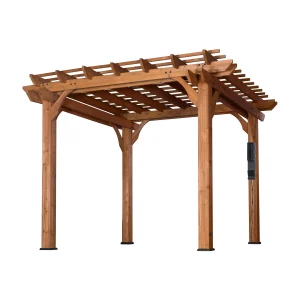
- The Beaumont 10×10, a cedar pergola under a multi-level trellis.
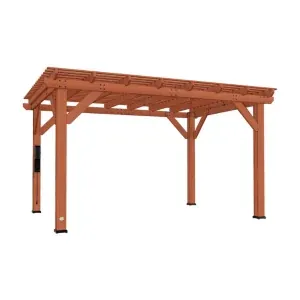
- The Delray 14×10, a cedar pergola with wide purlins, where the PowerPort sits on a corner post.
- The Beaumont 24×12, whose page specifies three 120V outlets plus three USB ports.
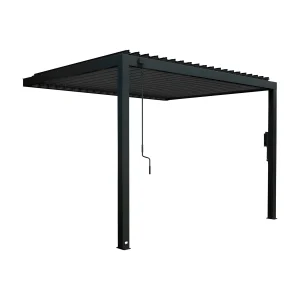
- The Evanston 12×10 louvered pergola, with three mains outlets and three USB ports.
The same feature appears on the Arcadia cedar gazebos in our gazebos, if you would rather have a solid roof over the outlets.
What you can run from it
Typical uses are low-power: string lights along the beams, a pedestal fan on a hot evening, a speaker, phone and tablet charging from the USB ports. Before plugging in anything heavier, such as a patio heater or a cooking appliance, read that appliance’s own requirements and the PowerPort’s instructions, and ask an electrician whether the supply can carry it. The product pages do not publish a total load figure for the post, so we do not suggest one.
Outdoor devices should be rated for outdoor use, and cords should be kept off walking routes.
Where the power comes from
The product pages describe the outlets on the post. They do not describe how the post is connected to your home’s supply, so read the maker’s instructions for that, and treat the connection as electrical work. In practice that means:
- A licensed electrician decides how power reaches the post, whether by a buried cable, a cable run along a wall, or another route.
- Your building office tells you whether that work needs a permit and an inspection. Outdoor electrical work commonly does.
- The circuit is protected as local code requires for outdoor outlets.
Moliser does not install pergolas or electrics. Plan the cable route before the slab is poured or the footings are set, since running a cable to a finished post is harder.
Questions to ask locally
- Does running power to a detached pergola need a permit here, and who may do the work?
- What protection does an outdoor outlet circuit need?
- If the pergola is wall-mounted, can the supply come through the house wall it is fixed to?
- Does the HOA have rules on outdoor lighting, such as brightness or hours?
Placing the post
The PowerPort is built into one post, so its position is fixed by the pergola’s layout. When you plan where the pergola goes, think about which corner will hold the outlets: ideally beside the seating, close to the house for a shorter cable run, and away from where a hose or sprinkler sprays. On a long frame like the Beaumont 24×12, put the zone you use after dark nearest the powered post.
Lights and the frame
Pergola beams are made for hanging things, within reason. Clip string lights to the frame rather than wrapping wire tightly around timber, and leave slack for the wood to move with the seasons. On the louvered Evanston, keep lights clear of the blades so they can still turn. Avoid drilling into galvanized hardware or through a powder coat, which can let rust in.
With power or without
| Pergola | Frame | Roof | Built-in power |
|---|---|---|---|
| Beaumont 10×10 | Cedar | Multi-level trellis | PowerPort: 3 outlets, 3 USB |
| Delray 14×10 | Cedar | Wide purlins | PowerPort: 3 outlets, 3 USB |
| Beaumont 24×12 | Cedar | Open trellis | PowerPort: 3 x 120V outlets, 3 USB |
| Evanston 12×10 | Steel | Louvers | PowerPort: 3 outlets, 3 USB |
| Kingston 7×7 | Vinyl | Not described | None listed |
For sizes, materials and anchoring, read the pergola buying guide, or compare every model in our pergolas.
Frequently asked questions
Can I run a patio heater from the PowerPort?
Check first. The product pages give no total load figure for the post, so read the heater’s requirements and the PowerPort’s instructions and ask an electrician whether the supply can carry it.
Does power to a pergola need a permit?
Outdoor electrical work commonly does. Your building office says whether a permit and an inspection apply and who may do the work.
Which corner should hold the powered post?
Preferably the one beside the seating, nearest the house for a shorter cable run and away from where a hose or sprinkler sprays.
Does the vinyl Kingston have outlets?
No power is listed for the Kingston. Among our pergolas, the PowerPort comes on the cedar Beaumont and Delray models and the steel Evanston.