

Cedar vs Vinyl Pergola (and Steel): What Each Frame Asks of You
The short answer
Cedar asks for cleaning and a fresh coat of finish as its factory stain weathers; vinyl asks you to keep it clean, follow the care notes in its box and check the anchors; powder-coated steel asks you to keep the coating intact and touch up chips. Ratings belong to each model, so compare the published figures rather than the materials.
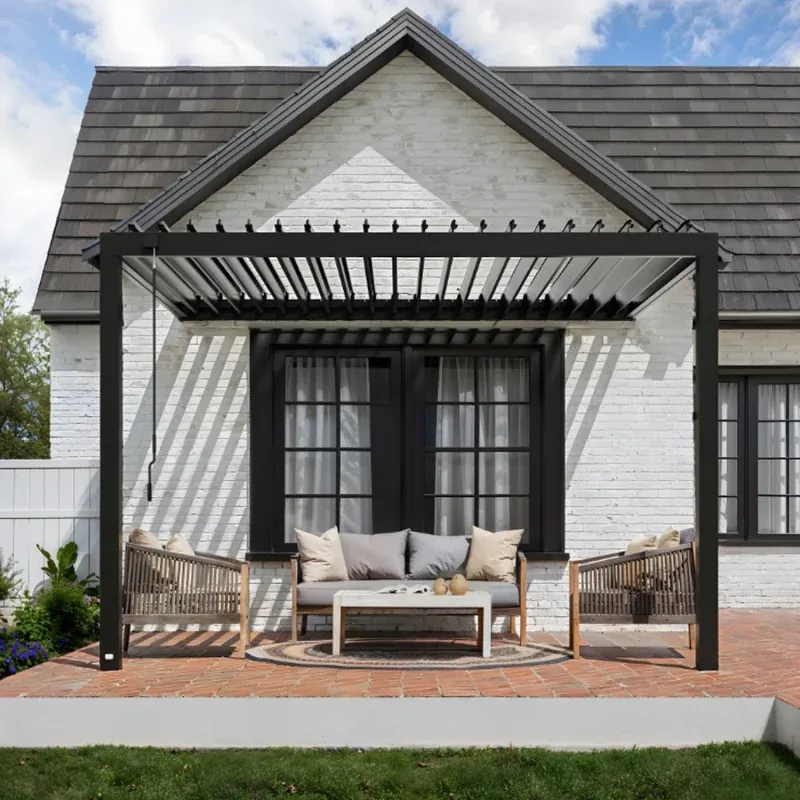
Two pergolas can share a footprint and a roof style and still ask very different things of their owners. The difference is mostly the frame material. Cedar, vinyl and powder-coated steel each look different on day one, behave differently in the weather, and need different care in the years after. Whether you are weighing cedar vs vinyl pergola frames or considering steel as well, this article compares the three using pergolas from our pergola collection, and it sticks to what the makers publish about each one.
The three materials at a glance
| Cedar | Vinyl | Powder-coated steel | |
|---|---|---|---|
| Example | Delray 14×10 | Kingston 7×7 | Evanston 12×10 |
| Factory finish | Light brown factory stain | White vinyl | Galvanized steel, black powder coat |
| Roof | Wide purlins | Not described on the product page | Adjustable louvers |
| Published wind rating | Up to 100 mph, once anchored | 40 mph | 100 mph |
| Published snow rating | Not published | 150 lb | 2,100 lb (12 in) |
The ratings belong to each model, not to the material in general. A steel frame is not automatically stronger than a cedar one; the roof design, the post sizes and the anchoring all count. Use the table to see what each maker states, not to rank materials.
Cedar: natural wood with a factory finish
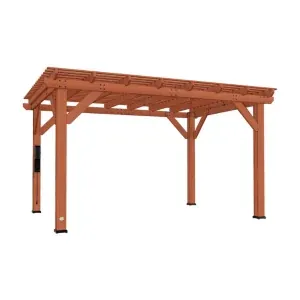
The Backyard Discovery Delray 14×10 cedar pergola is a good example of how cedar kits are supplied today. The wood arrives cut and drilled, with a light brown stain applied at the factory, and galvanized steel hardware joins the reinforced cross beams. It stands on four posts, one per corner, with the beam 7 ft 11 in above the ground and 140 sq ft beneath it.
What cedar asks of you
Wood is a natural material, and its look changes as it weathers. A factory stain gives a head start, but sun and rain wear any finish over time. Expect to clean the frame now and then and to refinish it when the color fades, using a product suitable for cedar. Check the galvanized hardware and the post bases after storms, and keep soil, mulch and standing water away from the bottom of the posts.
Where cedar fits
Cedar has the classic pergola look, takes climbing plants and hooks naturally, and can be restained in a different shade later. It suits owners who are happy to spend a weekend on outdoor upkeep now and then.
Vinyl: clean lines and simple care
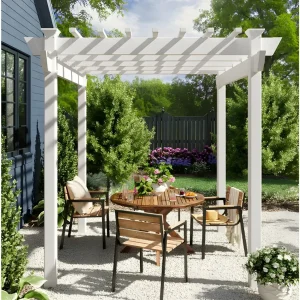
The Dura-Trel Kingston 7×7 is made of white vinyl that its maker describes as weather-resistant. Two people can assemble it with everyday household tools, and it comes with ground anchors for lawns and soil. A deck or a concrete slab needs different hardware, which is not in the box.
What vinyl asks of you
No care routine is listed for the Kingston, so work from the instructions in its box, keep the frame clean, and check that the anchors stay firm. Because the Kingston’s published wind rating is 40 mph and its snow rating is 150 lb, its site deserves some thought: a sheltered spot suits it better than an exposed hilltop, and snow should not be left to build up on it.
Where vinyl fits
A crisp white frame suits gardens where painted fences, trim or cottage planting already set the tone. At 7 x 7 ft inside the posts, the Kingston also fits small spaces where a larger cedar frame would crowd the yard.
Powder-coated steel: a modern frame with a louvered roof
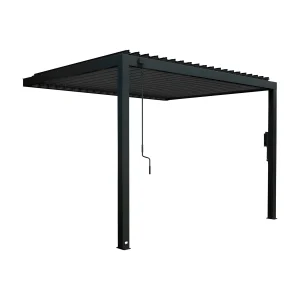
The Backyard Discovery Evanston 12×10 is galvanized steel with a black powder coat. It mounts to a wall along one edge, and its louvers turn with a hand wand from fully open to closed. Water from the closed louvers drains out of sight, down through the frame and the posts.
What steel asks of you
Powder coat protects the steel underneath, so the job is to keep the coating intact. Look for chips or scratches, especially near the posts and fixings, and touch them up following the maker’s care instructions. Keep the louvers and the drainage path clear of leaves so water can run where it was designed to. Because one side is fixed to the house, have a qualified professional confirm that the wall can take the load.
Where steel fits
Steel suits contemporary houses and dark trim, and the louvered roof gives a choice between sun and cover that an open wooden roof does not. The Evanston also carries a published snow rating, which matters where winters bring snow.
Questions to settle before you choose
- How much upkeep do you want? Cedar asks for periodic refinishing; steel for keeping the coating intact; for vinyl, follow the maker’s care instructions.
- Do you need rain cover? Only the louvered steel design closes; cedar purlins let the rain through, and the Kingston lists no roof covering.
- How exposed is the site? Compare each model’s published wind and snow ratings with your local weather, and anchor exactly as the maker specifies.
- What does the house look like? Wood, white vinyl and black steel each suit different styles.
- Freestanding or attached? The Delray and Kingston stand on their own; the Evanston fixes to a wall.
Material is one decision among several. For size, headroom, anchoring, permits and assembly, read our pergola buying guide before you settle on a model.
Frequently asked questions
Is a steel pergola stronger than a cedar one?
Not by material alone. The roof design, post sizes and anchoring all count; the Evanston in steel and the Delray in cedar are both rated to 100 mph, the Delray once anchored as specified.
Which frame material closes against rain?
Only the louvered steel Evanston. The Delray’s cedar purlins let rain through, and the Kingston’s product page describes no roof covering at all.
Where does the white vinyl Kingston suit?
A sheltered, compact spot. Its frame is 7 by 7 ft between the posts and carries a 40 mph wind rating with a 150 lb snow rating, so keep it off exposed ground and brush snow away.
What should I check on a cedar frame after a storm?
The galvanized hardware and the post bases. Keep soil, mulch and standing water away from the foot of each post, and refinish the wood when its color fades.