

Garden Shed or Workshop? Light, Windows and Workbenches
The short answer
Choose a workshop-style shed if you will spend time inside: it needs daylight, windows that open, a bench and room to stand. The Sunshed 12x12 has roof light panels, ten screened windows and a full-wall L-shaped bench; a storage shed such as the Olympia trades that for lockable space and two windows.
A storage shed keeps things; a workshop or potting shed is somewhere you spend time. The difference shows up in the details: how much daylight gets in, how many windows open, whether there is a bench to work at and room to stand at it. If you plan to repot seedlings, fix a bike or sharpen tools in your shed, those details matter more than cubic feet. This guide looks at choosing a garden shed or workshop through light, windows, workbenches and power, with the sheds in our range as examples.
Daylight first
A dark shed is fine for a mower and miserable for detailed work. Daylight comes in through windows and, on some designs, through the roof.
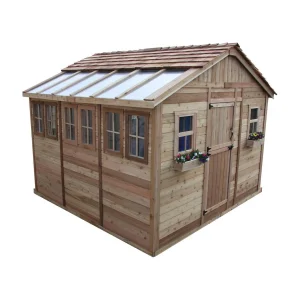
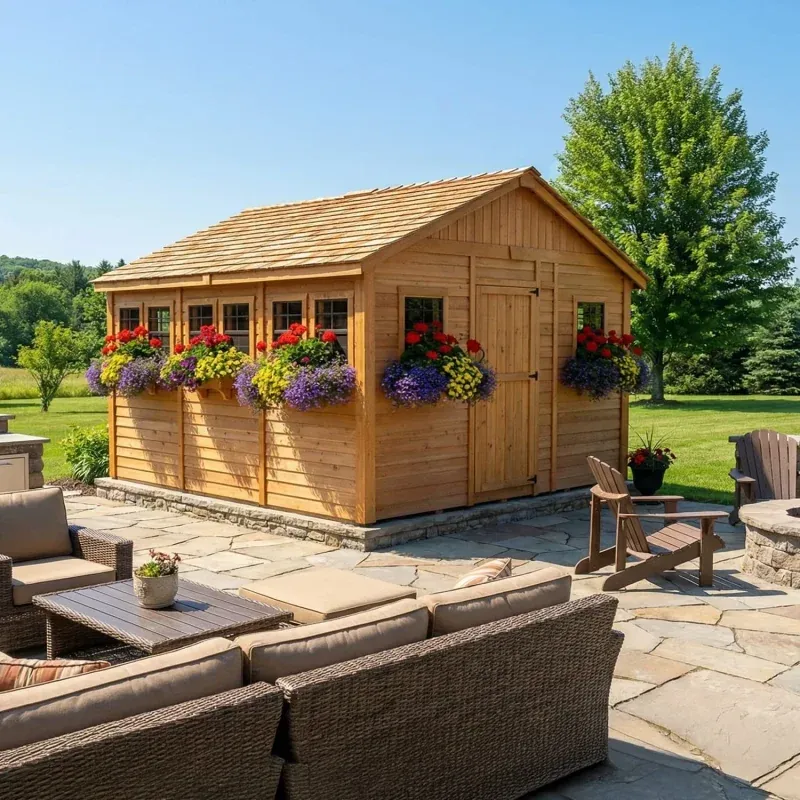
The Outdoor Living Today Sunshed 12×12 is built around light. One slope of its roof carries twin-wall Polygal light panels, so the inside stays bright without power, and ten aluminum-framed windows line the walls. Each window is screened and lockable, so you can open them for air without letting insects in.
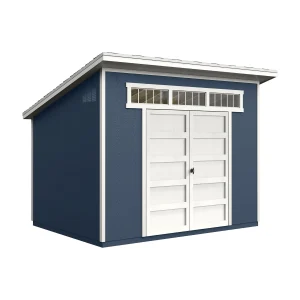
By contrast, the Handy Home Olympia has two windows that let daylight in to a storage space, and the Cedarshed Bayside has one fixed acrylic window above a planter box. Both are storage sheds first, and the light reflects that.
| Shed | Windows | Roof light | Bench |
|---|---|---|---|
| Sunshed 12×12 | 10, aluminum-framed, screened, lockable | Twin-wall light panels on one slope | L-shaped, 16 in deep, along a full wall |
| Olympia 10×7.5 | 2 | Not described | Not listed |
| Bayside 6×3 | 1 fixed acrylic, with planter box | Not described | Not listed |
A bench to work at
A built-in bench changes how a shed is used. The Sunshed includes an L-shaped workbench 16 inches deep that spans a full wall, which leaves the middle of the floor clear and puts the work surface under the windows. For potting, that depth holds trays and pots with room for a bag of compost; for small repairs, it holds a vise and a tool tray.
In a shed without a bench, plan for one before you plan for storage. Put it under the window that gets the steadiest light, at a height that suits whoever uses it, and keep the floor in front of it clear.
Room to stand and turn
Working space needs floor space. The Sunshed’s nominal 12 by 12 ft footprint takes up 155 by 145 inches on the ground and encloses 838 cu ft, with a height of 117 inches. Its 31 in Dutch door lets you open the top half for air while the bottom half keeps pets or wind out. A workshop also needs space to carry long items in and turn them; check door width against the longest thing you will bring through it.
Power and lighting
The product pages for our sheds do not include electrical fittings. If you want lights, outlets or a heater, that means bringing power to the shed. Treat it as electrical work: a licensed electrician should plan the supply, and your local office will tell you whether it needs a permit. Daylight panels and windows reduce how much artificial light you need, but evening work still calls for it. Questions about power in a shed are part of our shed permit and HOA guide.
Flowers outside, tools inside
A potting shed often sits in the middle of the garden, so how it looks matters. The Sunshed carries seven flower boxes outside, and its Western Red Cedar walls, in Architect Knotty siding, arrive unstained so you can finish them to suit the garden. The Bayside’s planter box sits under its window. If the shed will be seen from the house, choose siding and colour as carefully as size. Our comparison of cedar and engineered wood siding covers the trade-offs.
Ventilation and comfort
A sunny shed warms up quickly. Roof light panels and many windows bring light and heat together, so being able to open windows matters. Screens let you keep them open in insect season. In cold months, the same windows bring in the low winter sun, which suits early seed sowing.
Storage still counts
Even a workshop needs storage. Plan wall space for hanging tools, shelves above the bench, and a corner for large items like a wheelbarrow. If you need both a workspace and a lot of storage, a second, smaller storage shed beside the workshop may serve better than one crowded building.
Choosing between them
- Choose a workshop or potting shed like the Sunshed if you will spend time inside, want daylight without power, and value a bench and windows over volume per square foot.
- Choose a storage shed like the Olympia if the priority is lockable space for equipment, with daylight enough to find things.
Moliser does not assemble sheds; the Sunshed goes together as wall panels set on a plywood floor that arrives pre-cut, and the maker’s own time estimate is on its product page. Compare all our sheds, and read the storage shed buying guide for bases, floors and siding.
Frequently asked questions
Does the Sunshed come with electrics?
No. None of our shed pages lists electrical fittings; bringing power for lights or outlets is work for a licensed electrician, and your local office says whether it needs a permit.
How deep is the Sunshed’s workbench?
Sixteen inches, in an L along a full wall, which leaves the middle of the floor clear and puts the work surface under the windows.
Will a sunny shed get hot?
It can warm up quickly, because roof panels and many windows bring heat with the light. Screened windows let you keep them open through insect season.
Can one building be both workshop and storage?
It can, with tools on the walls and shelves over the bench, but if both lists are long, a small storage shed beside the workshop may work better.