

Cedar vs Engineered Wood Siding for a Shed
The short answer
Western Red Cedar is natural timber with knots and grain, light to handle, and it takes an exterior stain or oil once the shed is dry. LP SmartSide is an engineered wood siding made to consistent sizes and usually painted, following LP's guidance. Choose by the look you want and the coating you will renew.
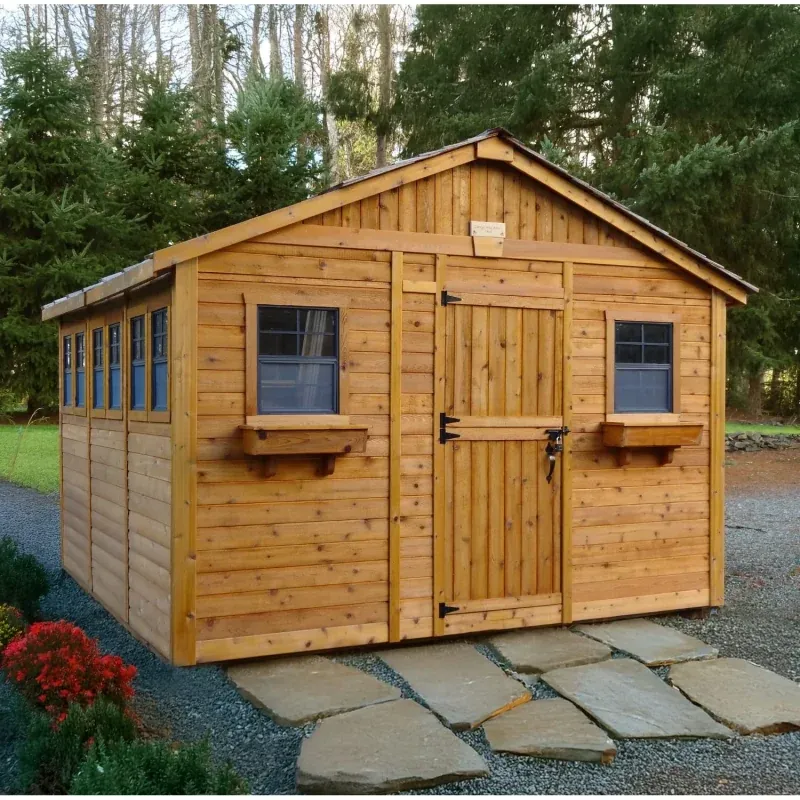
The walls of a wooden shed are its weatherproofing, part of its structure and a large share of its looks, so the siding deserves a careful choice. Two very different materials turn up in our range: natural Western Red Cedar and LP SmartSide, an engineered wood product. This comparison of cedar vs engineered wood siding for a shed explains what each one is, what it asks of you after the build, and which of our sheds use which.
What each material is
Western Red Cedar
Cedar is a natural softwood, sawn into boards or panels. It has a warm colour and visible grain, and it is light to handle. Left bare, it weathers to grey over time; finished, it holds whatever stain or oil you choose.
LP SmartSide
LP SmartSide is an engineered wood siding: a manufactured product rather than boards sawn from a log, made by LP to consistent sizes. The Olympia’s product page names the material; for how to coat and care for it, LP’s own guidance is the reference to follow.
Which of our sheds use which
| Shed | Siding | Finish when it arrives |
|---|---|---|
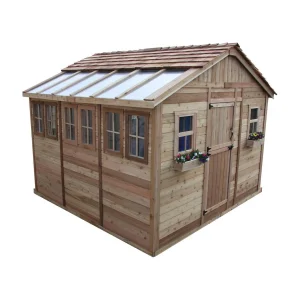
| Outdoor Living Today Sunshed 12×12 | Western Red Cedar, Architect Knotty siding | Unstained, ready for your finish |
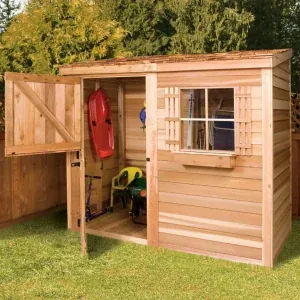
| Cedarshed Bayside 6×3 | Western Red Cedar in every part; walls supplied as panels | Finish not stated on the product page |
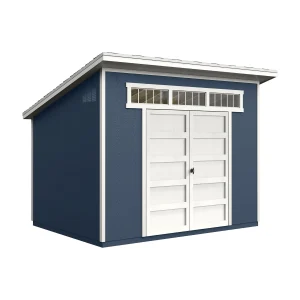
| Handy Home Olympia 10×7.5 | LP SmartSide | Shown blue with white doors in the product photo |
The Sunshed page is explicit that its knotty cedar arrives unstained so you can finish it as you like. The Bayside is cedar everywhere, including its Dutch door and its pre-shingled cedar roof panels. The Olympia pairs LP SmartSide walls with a floor of OSB on a treated frame.
Looks
Cedar reads as natural timber: knots, grain and colour variation from board to board. Architect Knotty siding on the Sunshed shows that character deliberately. Engineered siding gives a uniform painted finish that can match a house’s trim colour. Neither is right or wrong; the question is whether you want the shed to look like a garden building or like part of the house.
Finishing after the build
An unstained cedar shed is a blank surface. Apply an exterior stain or oil suited to cedar once the shed is up and the wood is dry, following the product’s label for weather and temperature. Pay attention to cut ends and the lower edges near the ground, which catch rain splashing off the ground. Test the colour on an offcut or a hidden area first.
Engineered siding is usually finished with paint. Follow the siding maker’s guidance and the paint label on how to coat it; that coating is what protects the surface, and it is what you will renew over the years.
Upkeep over the years
- Cedar: wash grime off gently, re-stain or re-oil when water stops beading or the colour fades, and keep plants and soil from touching the bottom boards. If you let it go grey, it still needs the same checks for damage and damp.
- Engineered siding: keep the paint film intact. Touch up chips and scrapes, keep the bottom edge clear of soil and standing water, and repaint when the coating wears.
Both materials benefit from the same basics: a raised, drained base, gutters or a roof edge that throws water clear, and a gap between siding and ground. Our article on shed foundations covers the base.
Weight and handling
Cedar is light, which helps when panels are lifted into place. The Bayside’s walls come as factory-built panels and its roof as shingled panels, so no cutting is needed. The Olympia publishes a finished weight of 1,539 lb, which gives a sense of how much material a 10 by 7.5 ft engineered-siding shed involves. Plan helpers either way; Moliser does not assemble sheds.
How to choose
- Choose cedar if you want a natural timber look, enjoy finishing wood, or want the shed to sit in a garden setting.
- Choose engineered siding if you want a painted finish that matches the house and prefer paint upkeep to staining.
Cedar care has a lot in common between sheds and pergolas; our cedar pergola care notes apply to a cedar shed’s finish too. For the full shed decision, read the storage shed buying guide.
Frequently asked questions
Which of the sheds use cedar siding?
The Sunshed 12×12, in Architect Knotty Western Red Cedar that arrives unstained, and the Bayside 6×3, which is cedar in every part. The Olympia 10×7.5 uses LP SmartSide.
Does the Sunshed arrive stained?
No. Its knotty cedar comes unstained so you can choose the finish; apply it once the shed is up and the wood is dry, and test the colour on an offcut first.
What upkeep do both sidings share?
A raised, drained base, a roof edge or gutter that throws water clear, and a gap between the siding and the ground.