

Shed Permits and HOA Rules: What to Check in General Terms
The short answer
Whether a shed needs a permit is set by your town, usually by floor area, height and distance from property lines, and an HOA may add its own rules on size, position and looks. Take the shed's measured footprint and height to the building and zoning offices, get any HOA approval in writing, then order.
Sheds sit in a grey zone for many homeowners: too small to feel like construction, too big to be furniture. Local rules settle it, and they differ from one town to the next. Some places let a small shed go up with no paperwork; others want a permit for anything with a roof and a floor; an HOA may have its own say on looks and position. This article covers shed permits and HOA rules in general terms, with the measurements and questions to take to your local office. It cannot tell you the rule where you live; only that office can.
The figures an office will ask about
Rules for accessory buildings usually turn on a handful of measurements. Have them ready from the product page before you call:
- Floor area, often the main threshold for whether a permit is needed.
- Height, sometimes measured to the top of the roof, sometimes to the midpoint of a pitched roof.
- Footprint and position, for setbacks from property lines and other buildings.
- Use: storage only, or a workshop or room with power.
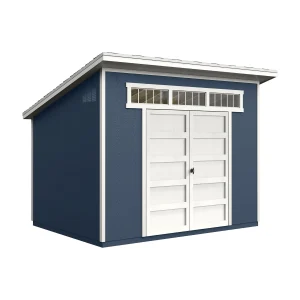
For the Handy Home Olympia, Handy Home gives a width of 10 ft, a depth of 7.5 ft, a height of 8 ft 6.75 in and a storage volume of 565 cu ft. The Sunshed from Outdoor Living Today occupies 155 by 145 inches of ground and stands 117 inches tall. The Cedarshed Bayside is 6 by 3 ft; its height is not published, so measure it from the instructions or ask us what the maker lists.
Questions for the building and zoning offices
- At what floor area or height does a shed need a permit here?
- How far must a shed stand from the rear and side property lines, and from the house?
- Can a shed stand against a fence or house wall, as a lean-to is designed to?
- Does a shed count toward the lot’s maximum coverage?
- Is a particular type of base required, or an inspection of it?
- Does adding electricity, for lights or a workbench, change the permit?
- Are there easements on the lot where nothing may be built?
Ask too whether the rule changes if the shed is part of a larger structure. A combined design such as the AECOJOY wood gazebo with its enclosed storage room, listed among our gazebos, covers 18.7 by 12.5 ft and may be assessed as one building.
Questions for an HOA
Where an association exists, its approval is usually separate from any permit. Its guidelines may cover:
- Whether sheds are allowed, and how many.
- Where on the lot they may go, often out of view from the street.
- Maximum size and height, which can be stricter than the town’s.
- Materials and colours: natural cedar, painted siding, roof colour.
- What to submit: typically a site plan, product photos and dimensions.
Get the approval in writing before ordering, and keep it with the product details in case anyone asks later.
Placement rules worth knowing in general
Even where no permit is needed, a few general points are worth following:
- Keep roof water on your own land. A shed near a boundary should not shed rain onto a neighbour’s yard.
- Leave access around the walls for upkeep, unless it is a lean-to made to sit against a wall.
- Have buried lines marked before digging for a base or anchors.
- Keep sheds clear of drainage swales and low spots where water collects.
Sheds with power or people in them
A shed used as a workshop or potting room, with lights and outlets, may be treated differently from a store for the mower. Electrical work outdoors commonly needs its own permit and a licensed electrician. A structure used as a room, like a screened sunroom, can also fall under different rules from storage. If your plans lean that way, say so when you ask. Our article on garden sheds and workshops covers the practical side.
A quick plan
- Pick a shortlist and note each shed’s floor area, height and footprint.
- Mark the planned position on the ground and measure to the property lines.
- Check with the building and zoning offices.
- Apply to the HOA if you have one.
- Prepare the base once approvals are in.
Gazebos raise similar questions; see our gazebo permits and HOA rules guide if one is on your list. For choosing the shed itself, start with the storage shed buying guide and compare the sheds we carry.
Frequently asked questions
What measurements will the office ask for?
Floor area, height, the footprint and its position relative to property lines, and the use. For the Olympia that means 10 by 7.5 ft and 8 ft 6.75 in tall.
Does adding lights or outlets change the permit?
It can. Outdoor electrical work commonly needs its own permit and a licensed electrician, so mention power when you ask.
Can a lean-to stand against my fence?
Ask zoning first. How close a shed may stand to a boundary or to the house differs by town, even for a design made to sit against a wall.
Is HOA approval separate from a permit?
Usually. An association’s guidelines may be stricter than the town’s on size, height and colours, so treat its written approval as a second step.