

Gazebo Buying Guide: Size, Roof, Frame and Anchoring From 10×10 Up
The short answer
Choose a gazebo in this order: measure the ground, the furniture and the clearance overhead; compare those numbers with the measured base and roof sizes rather than the nominal size; pick a hardtop for year-round use or a soft top for summer; then confirm the published ratings, the anchoring they assume, and your local approvals.
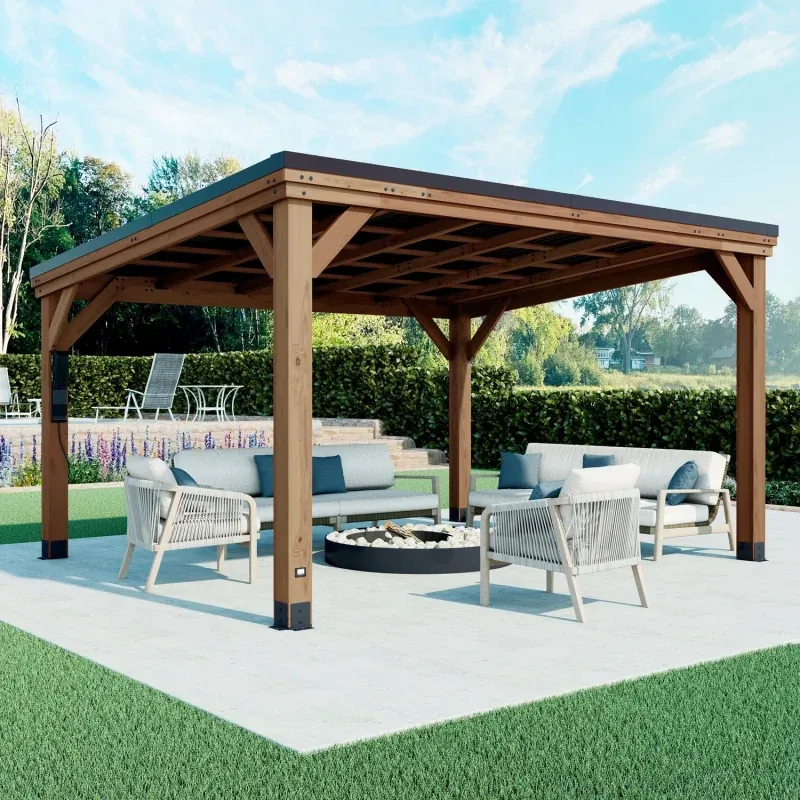
A gazebo is a small building, even when it arrives as a kit. It has a roof that has to shed rain and carry snow, posts that have to stay put in a gusty afternoon, and a footprint that has to suit the furniture you plan to put under it. This gazebo buying guide walks through the decisions in the order they usually come up: the space you have, the size you need, the roof, the frame, anchoring and weather ratings, and finally what assembly asks of you. Every example comes from the gazebos we carry, and every number quoted is the one the maker publishes on the product page.
Start with the space, not the catalogue
Before you compare models, walk out with a tape measure and answer three questions about the spot you have in mind.
- How much flat, open ground is there? Measure the full area you could cover, then subtract room to walk around the outside of the posts. A gazebo pushed tight against a fence or hedge is hard to assemble and hard to maintain.
- What will go underneath? A dining table with chairs pulled out, a sofa set, a hot tub or a grill each need a different amount of floor. Measure the furniture you own, or the furniture you plan to buy, and lay it out on the ground with string or garden hose.
- What is overhead? Branches, gutters, power lines and the eaves of the house all limit how tall a roof can be and where it can sit.
Write these numbers down. They decide everything that follows, and they are the numbers to compare against each product page.
Choosing a gazebo size
Gazebos are sold by a nominal size such as 10×10 or 12×10, given in feet. That name is a label, not always a measurement. Some makers use it for the roof, some for the base, and some round the real figure up or down. Look on the product page for the measured dimensions and work from those.
Two examples from our range show why this matters. The Aoxun 10×12 pavilion is listed as 10 x 12 ft, and the maker’s measured figures are a 142 by 119 in base and a height of 118 in. The Backyard Discovery Arcadia 14×12 sits on a 14 by 12 ft base, while its roof measures 14 ft 6.75 in by 12 ft 1 in and covers about 168 sq ft. When a page gives both a base and a roof size, the base tells you how much ground the posts take; the roof tells you how much shade and rain cover you get.
Rough size bands
As a starting point, a 10×10 footprint suits a small bistro set or a pair of lounge chairs with a side table. Sizes around 12×10 and 12×12 give a four- to six-seat dining table space to breathe. Footprints of 14×12 and above begin to hold two zones, such as a table at one end and seating at the other. These are planning bands, not rules; your own furniture measurements come first.
Height and headroom
Height matters for comfort and for anything you want to hang from the roof. Where makers publish it, the figure is on the product page: the Tomshoo 10×10 reaches 9 ft at its peak, and the two Arcadia models have a high edge of 8 ft 4.5 in under a sloped roof. On a sloped roof the low side is lower than the figure quoted for the high edge, so check where a ceiling fan or light would actually hang.
Hardtop or soft top
The roof is the decision that shapes a gazebo’s character.
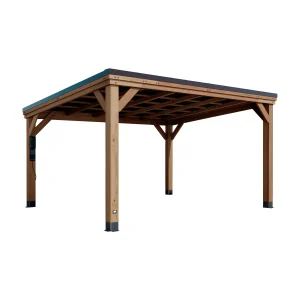
A hardtop uses a rigid roof, usually steel or another metal, fixed to a timber or metal frame. It is built to stay up through the seasons. Our hardtop examples include the Arcadia models, roofed in sloped 29-gauge galvanized steel, and the Aoxun pavilion with a gable metal roof described as waterproof and UV-protective.
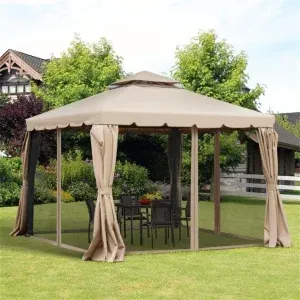
A soft top uses a fabric canopy stretched over a lighter metal frame. It weighs far less, goes up faster and is easier to move, but fabric does not carry snow the way steel does. The Tomshoo 10×10 soft top gazebo is a good illustration: a water-resistant canopy in two tiers with eight grommets for drainage, a frame of powder-coated aluminum and steel, with zip-up mesh netting and polyester curtains on each side.
Neither type suits every yard. If you want a structure that stays up all year in a place with real winters, start with hardtops. If you want an easy summer shelter, mosquito netting and a lighter build, start with soft tops. Our article on hardtop vs soft top gazebos compares the two in detail, model by model.
Frame materials: cedar, aluminum and steel
The frame is what you see and what holds everything up.
- Cedar is the timber in several of our gazebos. On the Arcadia models the whole frame is cedar, supplied pre-cut, pre-drilled and already stained. The Aoxun pavilion stands on four cedar posts measuring 4.7 in on each side. Wood gives a warm, cabin-like look and can be refinished over the years.
- Solid wood is how AECOJOY describes the frame of its 18.7×12.5 model; the species is not named on the product page.
- Aluminum and steel frames, usually powder-coated, are typical of soft tops. They are lighter, do not need staining, and suit a canopy that may come down for winter.
When you read a frame description, look for post dimensions, the coating, and how the posts meet the ground. Those three details tell you more than a photo does.
Wind and snow ratings, and why anchoring decides them
Some makers publish how much wind and snow a gazebo is designed to take. These figures are useful, but only if you read the conditions attached to them.
- The Arcadia 14×12 is rated by Backyard Discovery for winds up to 100 mph and 8,700 lb of snow, roughly 30 in, once anchored the way the maker specifies.
- The Arcadia 12×9.5 carries the same 100 mph wind figure and 5,800 lb of snow, again roughly 30 in, once anchored.
- The Aoxun pavilion is rated for 15 in of snow and 73 mph winds, with the expansion bolts fitted.
Notice two things. First, the units differ: one maker states snow as a total weight, another as a depth. You cannot rank them without knowing the roof area and the snow’s density, so treat each figure as a statement about that model, not a score. Second, every rating comes with an anchoring condition. A gazebo standing loose on a patio is not the gazebo the rating describes.
Some models carry no published rating at all. The Tomshoo and AECOJOY product pages do not list a wind or snow figure, so we do not quote one. If ratings matter for your site, choose among the models that publish them, or ask us and we will tell you exactly what the maker has stated.
What goes under the posts
A gazebo needs a firm, level base and something to hold each post down. The common options are a concrete slab or footings, a paver patio, a structurally sound deck, or open ground. Each needs different hardware, and that hardware is not always in the box: read the product page for what is included, such as the powder-coated steel anchor plates on the Arcadia 14×12 or the eight ground stakes supplied with the Tomshoo. If your base is a deck, check with the deck’s builder or a qualified professional that it can carry the load and the anchoring the maker calls for.
Permits, HOA rules and power
A permanent gazebo is an accessory structure, and many towns and homeowners’ associations have rules about where one can stand, how tall it can be and how close it can sit to a property line. The rules differ from place to place, so we do not quote any. Before you order, call your local building department and, if you have one, your HOA, and ask about size limits, setbacks and approval.
Some of our gazebos include a power post. The Arcadia models carry Backyard Discovery’s PowerPort, with three electrical outlets and three USB ports on one post. Ask locally how that post should be connected to your home’s supply and whether the work needs a licensed electrician or a permit.
Gazebos with storage built in
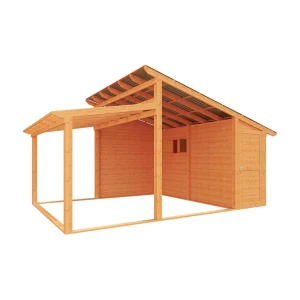
A few designs combine shelter and storage under one roof. The AECOJOY 18.7×12.5 wood gazebo is one: an open seating area and an enclosed shed section with its own door and window, all under a single lean-to metal hardtop. A combined footprint like this is larger than a standalone gazebo, so measure for the whole length and check local rules for the total size.
Assembly: what to plan for
Every gazebo we sell is a kit, and Moliser does not provide assembly or installation. Our FAQ explains that each product comes with its maker’s instructions and that we answer questions by phone or email while you build.
What the makers publish helps you plan. Backyard Discovery supplies cedar parts already cut, drilled and stained, and guides the build through its interactive BILT 3D app. The Aoxun kit weighs 384.56 lb, which tells you the cartons are a job for more than one person. Assembly times are not published for these gazebos, so we do not estimate one. Plan for at least two adults, a clear and level work area, a ladder rated for the roof height, and the tools the instructions list.
A short checklist before you order
- Measure the ground, the furniture and the space overhead.
- Compare those numbers with the measured dimensions on the product page, not only the nominal size.
- Choose hardtop or soft top for how you will use it through the year.
- Check whether the model publishes wind and snow ratings, and what anchoring they assume.
- Confirm your base and the hardware it needs.
- Ask your building department and HOA about approval.
- Line up helpers and tools for assembly day.
Frequently asked questions
Is a 10×10 gazebo big enough for a dining table?
It depends on the table. A small round table with four chairs can fit, but chairs need space to pull out. Lay your furniture out on the ground first and compare with the measured base on the product page.
Can a soft top gazebo stay up all winter?
The soft top models we carry do not publish a snow rating, so we cannot say they are designed for it. Where snow is expected, a hardtop with a published snow rating is the safer starting point.
Do I need a permit for a gazebo?
It depends on where you live, the size of the gazebo and whether it has power. Ask your local building department and your HOA before ordering.
Does Moliser assemble or install gazebos?
No. We do not offer assembly or installation. Each kit comes with the maker’s instructions, and you can contact us with questions while you build.
How do large kits travel to my address?
Our Shipping Policy covers how orders are sent, including large structures that travel by freight.