

Gazebo Foundations: Concrete, Pavers, Deck or Lawn
The short answer
Any of the four can carry a gazebo if it stays level, holds the anchors and stays dry. A sound concrete slab is the predictable base for a hardtop; pavers need footings beneath the posts; a deck needs framing under each post; and lawn suits staked soft tops, while a hardtop there needs concrete piers or a slab.
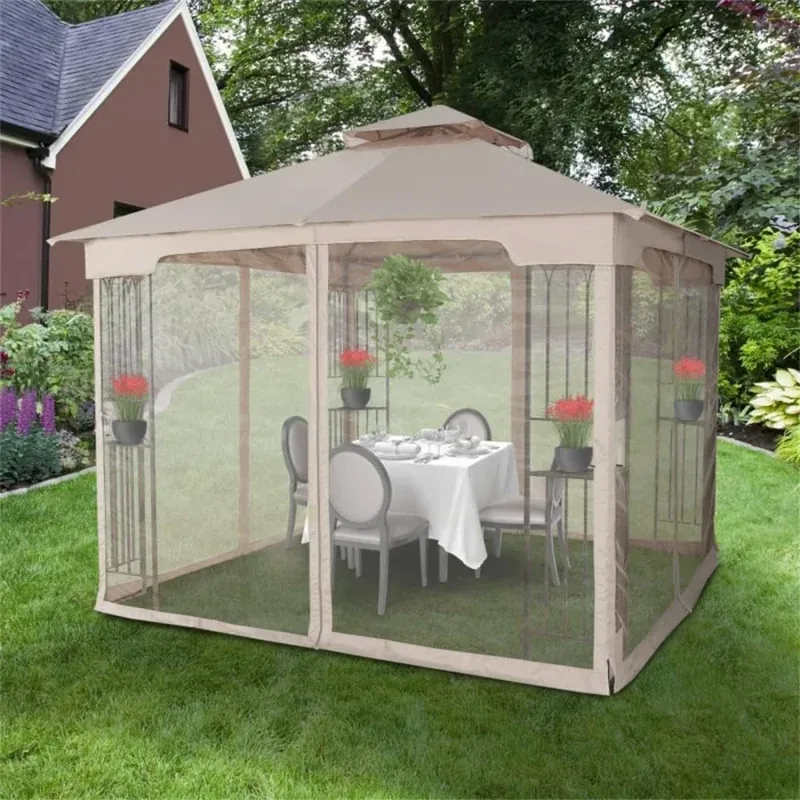
What a gazebo stands on decides how it is fixed down, and how it is fixed down decides whether its wind and snow figures mean anything. The four surfaces buyers ask about are a concrete slab, a paver patio, a wooden deck and plain lawn. Each can work; each asks for different preparation and different hardware. This guide to gazebo foundations sets out what each surface involves, and what the makers of the gazebos in our range include in the box.
What any foundation has to do
Whatever the surface, a gazebo base has three jobs:
- Stay level, so the frame goes together square and the roof sheds water the way it was designed to.
- Hold the anchors, so the structure resists uplift in wind, which is usually the larger force on a roofed frame.
- Stay dry, so posts and bases are not sitting in water after every storm.
A surface that does all three for a lounge chair may not do them for a roof. Judge it by what the anchors need.
Concrete slab
A sound, level concrete slab is the predictable base for a hardtop. Post bases are bolted into it with anchors chosen for concrete, and the result is rigid. Before relying on an existing patio, check its thickness at the post positions, look for cracks running near them, and confirm it was poured on a compacted base. A new slab gives you the chance to plan the post positions and any cable route for powered posts before the pour.
The Arcadia 14×12 stands on powder-coated steel anchor plates, and Backyard Discovery’s ratings of up to 100 mph wind and 8,700 lb of snow apply once it is anchored as the maker specifies. The Aoxun pavilion states its 73 mph wind figure with expansion bolts fitted, which are fixings made for masonry and concrete.
Paver patio
Pavers look like a solid floor, but each one is a separate block on a bed of sand or gravel. A bolt into a single paver holds only as well as that paver sits. For a hardtop, the usual approaches are to lift the pavers at each post and pour a concrete footing beneath, or to anchor through to a footing set below the paver bed. Decide this before the patio is laid if you can; retrofitting means lifting and relaying blocks around each post.
Wooden deck
On a deck, the anchors go into the deck’s structure, not just the surface boards. Boards alone are thin and can split around a fixing. Where a post lands, there should be framing beneath it, and the deck itself has to carry the gazebo’s weight plus the loads the roof passes down in wind and snow. That is a question for whoever designed or built the deck, before you order. A hardtop’s loads go straight into the framing through four or more points.
A lighter soft top on a deck still needs fixing; stakes made for soil will not do. Check the maker’s instructions for what is approved on a deck.
Lawn and soil
Grass is an easy place to put a light gazebo and a difficult place to hold a heavy one. Both 10×10 soft tops we carry come with eight ground stakes: the Tomshoo 10×10 and the Laurel Canyon 10×10. Stakes work in firm soil; in loose, sandy or very wet ground they hold less, and you may want heavier ground anchors.
For a hardtop on a lawn, the posts normally need footings: concrete piers set below the soil at each post, or a small slab under the whole footprint. Lawn also tends to be less level than it looks, so check across the footprint with a long straight board and a level.
Included and not included
Read the product page and the instructions for exactly what hardware comes in the box. From what our gazebo makers publish:
| Gazebo | Anchoring detail published |
|---|---|
| Arcadia 14×12 | Powder-coated steel anchor plates under the posts; ratings apply once anchored as specified |
| Aoxun 10×12 | Wind figure stated with expansion bolts fitted |
| Tomshoo 10×10 | 8 ground stakes in the box |
| Laurel Canyon 10×10 | 8 stakes supplied |
Where a page does not say what fixings are included for your surface, plan to buy anchors rated for it, and ask us what the maker lists if in doubt.
Drainage and level, whichever you choose
- Water should run away from the post bases, not pool around them.
- A hardtop sheds its roof water at the drip line; make sure that line does not dump onto a path or a neighbour’s fence.
- Check level corner to corner before assembly, not after.
For how the ratings depend on all of this, read our explainer on gazebo wind and snow ratings. For the wider choice, start with the gazebo buying guide.
Frequently asked questions
Can I bolt a gazebo straight into pavers?
Not reliably. Each paver is a loose block on sand or gravel, so a bolt holds only as well as that block sits; for a hardtop, lift the pavers at each post and pour a footing beneath.
Will the ground stakes hold in sandy soil?
Less well. The eight stakes supplied with the Tomshoo and the Laurel Canyon suit firm soil; in loose, sandy or very wet ground, plan on heavier ground anchors.
Who should confirm that my deck can take a gazebo?
Whoever designed or built the deck. The posts must land on framing, not boards alone, and the deck has to carry the structure plus the wind and snow loads its roof passes down.
Does the base affect the published ratings?
Yes. The Arcadia 14×12 figures apply once its steel plates are anchored as specified, and the Aoxun wind figure assumes its expansion bolts are fitted, so a weak surface undoes the rating.