

What Size Shed Do I Need? From a 6×3 Lean-To to a 12×12 Garden Shed
The short answer
List and measure everything the shed must hold, sketch it along the walls with a clear path from the door, and add a margin. A 6x3 lean-to suits hand tools in a side yard, a 10x7.5 with double doors takes a mower and bikes, and a 12x12 fits storage plus a workbench.
“What size shed do I need?” is the question buyers come back to again and again, and size is the decision that is hardest to change later. Too small and the mower lives outside; too big and the shed swallows the yard and may need approvals a smaller one would not. This article turns what you plan to store into a footprint you can compare with real products, using three sheds from our shed range that cover a wide span of sizes: a 6×3 lean-to, a 10×7.5 storage shed and a 12×12 garden shed.
Step 1: list and measure what goes inside
Walk around the garage, the porch and the corners of the yard and write down everything the shed should hold. Group it:
- Large items that sit on the floor: mower, wheelbarrow, bikes, a snow blower, a garden cart.
- Things that hang: rakes, spades, hoses, folding chairs, ladders.
- Things on shelves: paint, fertilizer, pots, hand tools, cushions in storage bags.
- Space to work: a potting bench or workbench, and room to stand at it.
Measure each large item: length, width and height, and with handles in the position they are stored. Wheeled items also need room to turn as they come through the door.
Step 2: sketch the floor plan
Draw a rectangle on paper or chalk one on the driveway. Place the large items along the walls, leave a clear path from the door to the back, and keep the space in front of each shelf open. If you will work inside, add the bench and the standing room in front of it.
The rectangle you end up with is the inside floor you need. Add a margin for things you have not thought of yet; storage has a way of growing to fill the space it is given.
Step 3: think in volume, not only floor area
Two sheds with similar floors can hold very different amounts once you use the walls and the space above head height. That is why some makers publish volume in cubic feet. Shelving, hooks and overhead racks turn that volume into usable storage, so a taller shed can make up for a smaller footprint.
Three sizes from our range, compared
| Bayside 6×3 | Olympia 10×7.5 | Sunshed 12×12 | |
|---|---|---|---|
| Footprint | 6 x 3 ft | 10 ft wide, 7.5 ft deep | Nominal 12 x 12 ft; 155 x 145 in on the ground |
| Height | Not published | 8 ft 6.75 in | 117 in |
| Storage volume | Not published | 565 cu ft | 838 cu ft |
| Roof | Lean-to, single slope | Not described on the product page | Light panels on one slope |
| Door | Cedar Dutch door | Double, lockable | 31 in Dutch door |
| Inside extras | Plywood floor on cedar joists | Floor included; 2 windows | L-shaped workbench, 10 windows |
A narrow 6×3 for hand tools and a side yard
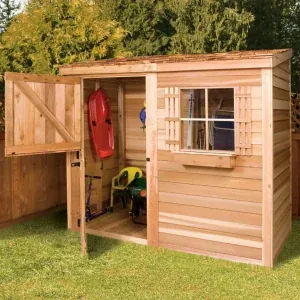
The Cedarshed Bayside 6×3 is a lean-to designed to stand against a fence or a house wall, in a strip of yard too narrow for a conventional shed. Three feet of depth suits long-handled tools on the wall, a few shelves, hoses and smaller equipment. Measure carefully before planning a mower or wheelbarrow for it: check the item’s length and width against the depth and against the door.
A 10×7.5 for the mower, the bikes and the garden gear
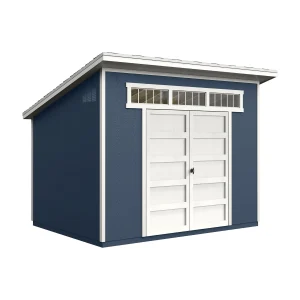
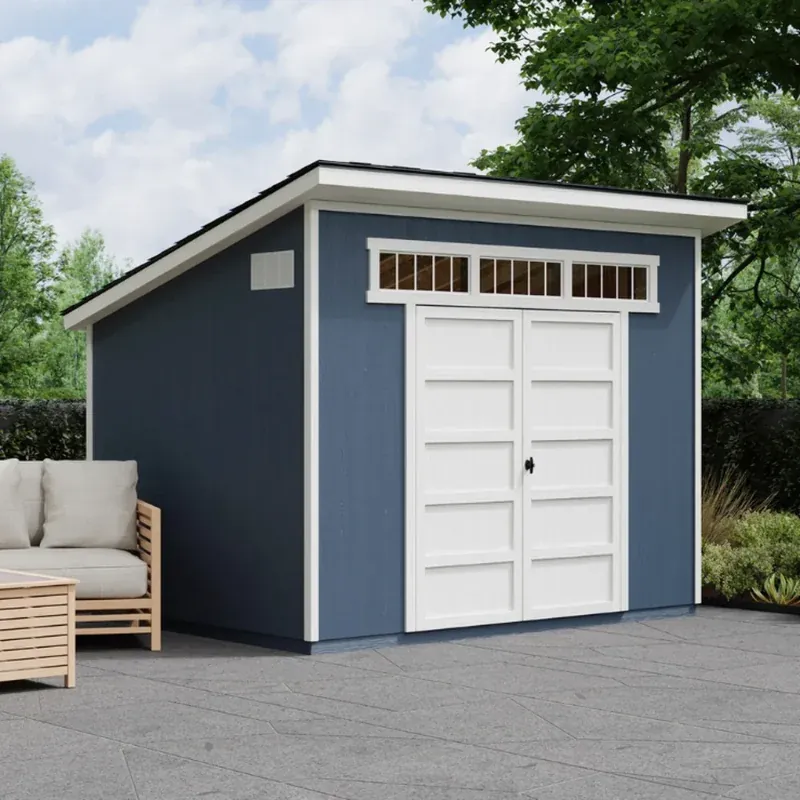
The Handy Home Olympia 10×7.5 gives 565 cu ft of storage behind lockable double doors, with a floor included in the kit. A double door is the feature to look for when wheeled equipment is on your list, because it lets large items in without turning tight corners. Two windows add daylight for finding things without a flashlight.
A 12×12 when the shed is also a workspace
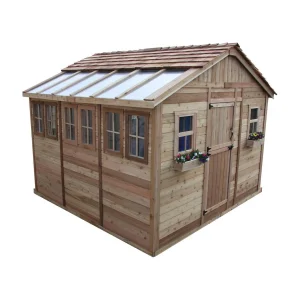
The Outdoor Living Today Sunshed 12×12 encloses 838 cu ft and devotes a full wall to an L-shaped workbench 16 in deep. With ten windows and light panels in one roof slope, it is planned as a place to spend time, potting plants or working on projects, as well as a store. If your list includes a bench and standing room, a footprint in this range is where to start looking.
Step 4: check the door, not just the floor
A shed can have enough floor and still fail at the door. Compare the widest item on your list with the door opening. Single doors, including Dutch doors that split at the middle, suit people and hand tools; double doors suit equipment on wheels. Where a product page gives the door width, as the Sunshed’s 31 in does, use it. Where it does not, ask us and we will tell you what the maker states.
Step 5: fit the shed to the site
Once you know the size you need, check it against the ground.
- Room around it. Leave room on every side to assemble the shed and to reach the walls for upkeep later.
- Level and drainage. Pick ground that drains away from the shed, and plan a level base.
- Access. Make sure the door faces a path you can roll equipment along, not a flower bed.
- Rules. Many towns and HOAs set limits on shed size, height and distance from property lines, and the limits vary. Ask locally with the shed’s measured dimensions in hand.
When in doubt, which way to lean
If your list fits comfortably in two sizes and the site and local rules allow the larger one, the larger shed leaves room for what comes next. If the site is tight or a size limit applies, use height and wall storage to make a smaller footprint work.
Size is one of several choices. For siding, floors, roof styles, weather ratings, foundations and assembly, read our storage shed buying guide.
Shed sizes: frequently asked questions
How much does the Olympia 10×7.5 hold?
Handy Home lists 565 cu ft of storage behind lockable double doors, and the kit includes its floor.
Will a mower fit in the Bayside 6×3?
Measure before you plan on it. The Bayside is 3 ft deep with a cedar Dutch door, so check the mower’s length and width against both the depth and the door opening.
Why compare sheds by volume?
Because shelving, hooks and overhead racks turn the space above head height into storage, a taller shed can make up for a smaller floor. Where a maker publishes cubic feet, such as 565 for the Olympia and 838 for the Sunshed, compare those figures.
Should I size up when unsure?
If the site and local rules allow the larger size, yes; if they do not, lean on height and wall storage to make the smaller footprint work.